How Petrol Prices in Pakistan Changed Over the Last 25 Years
Petrol prices in Pakistan have always been a hot topic because they directly affect daily life, inflation, transport costs, and overall economic stability. Over the years, fuel prices have increased sharply due to Global oil rates, rupee depreciation, taxes, and government policies. This article provides a clear historical overview of Petrol prices in Pakistan, helping readers understand how and why prices have changed over time.
History Of Petrol Prices
Prices mentioned below are average annual prices and may vary slightly due to monthly revisions.
| Year | Petrol Price (PKR/Liter) | Key Reasons |
| 2000 | 30 – 32 | Stable economy, low crude prices |
| 2005 | 50 – 55 | Rising global oil demand |
| 2010 | 72 – 75 | Oil price recovery after global recession |
| 2013 | 105 – 108 | Rupee depreciation, higher taxes |
| 2015 | 75 – 78 | Sharp fall in international oil prices |
| 2018 | 85 – 90 | IMF pressure, exchange rate adjustment |
| 2019 | 110 – 115 | Increased petroleum levy |
| 2020 | 95 – 100 | COVID-19 reduced global oil demand |
| 2021 | 140 – 145 | Global energy crisis |
| 2022 | 230 – 235 | Record global oil prices, subsidy removal |
| 2023 | 260 – 272 | IMF conditions, high taxes |
| 2024 | 275 – 290 | Currency pressure, fiscal deficit |
| 2025 | 280 – 300 | Global instability & taxation policies |
History of Petrol Prices: Year-by-Year Hikes in Pakistan
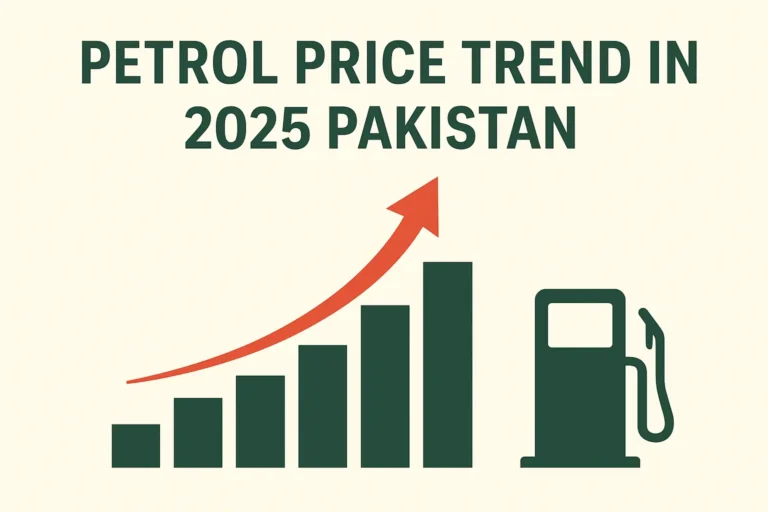
History of petrol prices shows year-by-year fuel rate changes in Pakistan, offering insights into price spikes, inflation impacts, and government policies.
- 2008: Global oil shock raised petrol price to ~PKR 60
- 2013: Fuel price crossed PKR 100 due to IMF reforms
- 2022: Petrol price surged to PKR 235 after subsidy removal
- 2023–2025: Prices remained high due to weak rupee and global instability
History of petrol prices in Pakistan helps people see the bigger economic picture. While short term relief may happen, long term trends suggest that fuel prices are likely to remain high unless major economic reforms are introduced.
Government Policies and Petrol Prices in Pakistan
The history of petrol prices is also shaped by government policies, including taxation, subsidies, and regulatory changes.
- Subsidy removal in 2022 → price spike
- Petroleum levy accounts for 25–30% of price
- 15-day price revisions by OGRA determine official petrol rates
Why Petrol Prices Increase in Pakistan?
Petrol prices in Pakistan are not controlled by a single factor. Multiple local and international elements influence fuel costs:
- International Crude Oil Prices
- Dollar to Rupee Exchange Rate
- IMF Agreements
- Government Taxes & Levies
- High import dependency
Frequently Asked Questions:
When was petrol cheapest in Pakistan?
Between 1999 and 2002, petrol stayed around PKR 30 per liter.
When did petrol prices cross PKR 100?
Petrol prices crossed PKR 100 per liter around 2012–2013.
When did petrol cross PKR 200?
In June 2022, after fuel subsidies were withdrawn.
When was petrol cheapest in Pakistan?
Between 1998–2002, around PKR 30 per liter.
Are petrol prices expected to fall?
Only if rupee strengthens and taxes are reduced, which is unlikely short-term.
Why are petrol prices so high now?
High prices are due to global oil costs, rupee devaluation, heavy taxation, and IMF conditions.